 Good news for those who need accommodations within the bustling city of Amsterdam during their visit to Callantsoog. Amsterdam is not too far by car or train and accommodations such as Amsterdam apartments on www.hotels-in-netherlands.com are readily available to cater to your comfort and convenience. Also, you can consider other great options from tophotels.com known for their exceptional service.
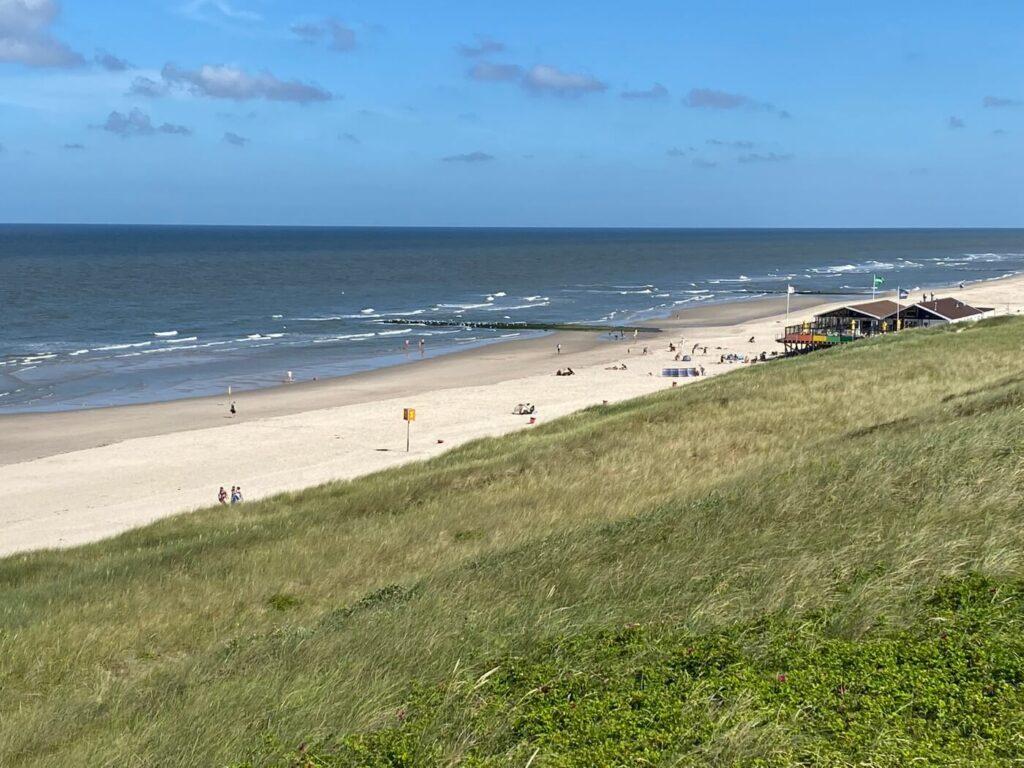
Callantsoog is a cosy seaside resort in the tip of North Holland, with a radiant beach, a dreamy dune landscape and colourful bulb fields. Behind the dunes lies the old village with a cosy village square, terraces and beach shops. Callantsoog is a typical seaside resort for spending whole days on the beach, hopping from beach pavilion to beach pavilion. Callantsoog is peaceful in itself, very different from busy Zandvoort or Scheveningen!
But besides beach days, there are many other things to do in Callantsoog, whose original village was wiped out during a tidal wave in 1570. The village was then relocated and now nestles safely behind metre-high dunes. In an old farmhouse, see what life used to be like, while in the Beachcomber's Museum you can admire an enigmatic creature once fished out of the sea. Callantsoog has endless opportunities for cycling and walking along varied nature with dune roses, orchids, tulips and Europe's two largest dune lakes.
Not surprisingly, so many people flock to Callantsoog every year for a carefree holiday - including a remarkable number of Germans. There are plenty of hotels, holiday parks, campsites and holiday homes to lull you to sleep after a day of relaxing on the beach. And wake up to the whistle of a wheatear (hopefully). What are you waiting for a holiday in this calming seaside resort? Here are 10 tips what to do in Callantsoog!
Plan your holiday to Callantsoog here


Get a breath of fresh air on the beach of Callantsoog
The biggest attraction of Callantsoog is the kilometer-long beach that has attracted holidaymakers to the seaside resort for many years. You can get a breath of fresh air or sunbathe on a spacious and wide beach flying the Blue Flag. This means it is clean and safe, so ideal for a lovely day of sun, sea and sand!

Take a walk along the surf, dive into the North Sea on a warm day and let your children scoop and build sandcastles. There are no fewer than five beach pavilions to grab a refreshing beer or wine with your rosy head and enjoy the sunset. At some you can rent a beach bed and windbreak.

Callantsoog beach does not have a promenade, but is located behind the dunes and can be reached via four different beach entrances. The most centrally located is Strandslag Callantsoog, which can be reached from the Dorpsplein in the centre. To the south is Strandslag Kiefteglop, and to the north you can reach the sea via Strandslag Seinpost and Strandslag Abbestee. From 1 June to 31 August, lifeguards walk around keeping an eye on things. If the yellow flag is flying, you have to deal with strong currents and dangerous mussels in the sea.
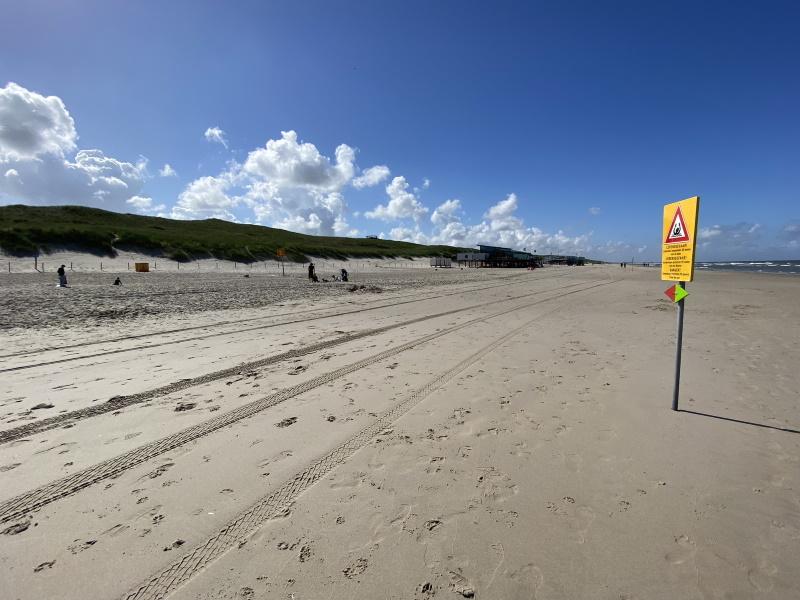
Would you like to be naked on the beach? Then Callantsoog is the place to be, as it has the oldest and longest nude beach in the Netherlands (founded in 1973). On the south side, you can sunbathe without swimwear on the 2,300-kilometre-long 'bare bottom beach'. The nude beach also has its own beach pavilion, Strandpaviljoen Zilte Zucht, but you must put on (or keep on) your shorts if you consume anything here.
Visit the Beachcomber's Museum Callantsoog
Curious about what washes up on Callantsoog's beaches? Then visit the Beachcomber's Museum, with its colourful collection of 'treasures from the sea'. Among them a lot of colourful plastic, but also bombs, grenades, boxes of cigarettes, bags of Chinese noodles and floating packs of drinking water for emergencies.

One special find is Callantsoog's baby mermaid. This is a kind of foetus in strong water, but with a mermaid tail instead of legs. The 'strange fish' was fished out of the French sea as early as 1676, when the little creature happened to end up in a fishing net. Pathologists are keen to examine the baby, but the museum prefers to keep it a mystery. Besides the beach finds, the museum also has a collection of artworks by Dutch artist Challa and you can play games. Make beach balls move, catch shovels and help a seagull fly.

At the museum there is a shop and the Beachcomber's Café where you can get cakes, sandwiches, coffee and tea from their own garden. The museum is open from April to September, and closed on Thursdays and Fridays. By the way, the entrance fee is quite hefty: €12.50 for adults. Children up to 18 pay €5. Address: Mineweg 1, 1759 NZ Callantsoog. Website: www.juttersmuseumcallantsoog.nl
Hiking in Het Zwanenwater nature reserve
Just south of Callantsoog you will find Het Zwanenwater, a unique nature reserve with the two largest natural dune lakes in Europe. These lakes, the First Water and the Second Water, were created in the 18th century by a rise in groundwater. Surrounding the lakes is beautiful nature with dunes, marshes, heathland, grasslands and dune valleys. It is a protected landscape managed by Natuurmonumenten.

There is plenty to see and do in Het Zwanenwater. For instance, you can choose two walking routes of 2 and 4½ kilometres which are marked out in the dunes. Along the way, you will find beautiful viewpoints and bird-watching huts where you can spot birds.

Especially migratory birds flock to the area, from cormorants to the singing bluethroat. A total of 75 species of birds have been counted. From May to July, ten species of orchids provide colour in the dune valleys. Check the agenda for special excursions where you go out with the forester. Admission is €3, payable at a vending machine (debit or cash). Address: Zuidschinkeldijk, 1759 Callantsoog. Website: www.natuurmonumenten.nl
Museum farm Tante Jaantje
If you want to know how the inhabitants of Callantsoog used to live and work, you can visit Museumboerderij Tantje Jaantje. An authentic dune dome takes you on a journey through the past, up to the foundation of Callantsoog some 450 years ago. The farm probably dates from the year 1800 and was largely built with wood from the beach.

The farm itself is decorated in the style of 1900 with antique furniture, traditional clothing and old fishing utensils. Back then, the Vos family lived here with 16 children. You can see that they were not rich and lived frugally. There are also temporary exhibitions highlighting a piece of village history. The museum is open from July to October, and only on certain days. Address: Dorpsplein 33, 1759 GM Callantsoog. Website: www.tantejaantje.nl
Visit the church of Callantsoog
On the south side of the centre is Callantsoog's Reformed Church, one of the oldest buildings in the seaside resort. The Protestant church was built around 1580 with materials from an older church that was swallowed by the flood in 1570. In later centuries, the church also played a role during several turbulent events. For instance, English and Russian armies landed in Callantsoog in 1799 in an attempt to defeat the Batavian-Dutch troops. Upon invasion, they used the church as a horse stable.

Notable is the 15-metre-high wooden church tower, which used to serve as a beacon for sailors on the North Sea. In 1977, the dunes at Callantsoog were raised and the tower was no longer visible. The underside was painted white to make the church look more beautiful after a restoration in 1925. The walls were chipped in such a way as to create a mishmash of stones, which churchgoers did not like. Inside the church, you can admire a ship model of the Frankendaal, a whaler from the 18th century. Address: Kerkplein 1, 1759 GR Callantsoog. Website: callantsoog.protestantsekerk.net
Cycling in the dunes around Callantsoog
Callantsoog is the perfect starting point for a cycling trip through the dunes of North Holland. Directly behind the dunes and the beach runs a beautiful cycle path for a trip towards Den Helder in the north, or to the high Schoorl dunes in the south. You could possibly make a round trip of it, via the rural polders in the head of North Holland and along a stretch of the Wadden Sea.

On Fietsroutenetwerk.nl there is a cycling route of 34 kilometres through the dunes of Callantsoog where you can fully enjoy the natural beauty. In spring, nature is especially beautiful when the bulb fields are in bloom (read more about this below). You can hire a bicycle at Harry's Tweewielers(www.harrystweewielers.nl) on the Dorpsplein in Callantsoog. This square also has a charging station for e-bikes.

If you prefer a long bike ride, you can depart from Callantsoog for the national cycle route LF10. This route follows the coast from the Wadden Sea to the border town of Bad Nieuweschans in the province of Groningen. The total length is 270 kilometres.
Admire the view in 't Botgat
For a view over grasslands, pools and dunes, climb the watchtower of 't Botgat. This is a dune area on the northern side of Callantsoog where soldiers used to hold shooting drills. In 2005, all the concrete was removed and nature was allowed to take its course. Meanwhile, this new nature area has already been discovered by the wheatear, a striking songbird that likes to hang out in low dune grass. Foxes, rabbits, sand lizards and Scottish highlanders also live here.

A lookout tower has been erected for the view of the dune landscape, birds and flowers. In the dune area around 't Botgat, you can take several walks, ranging from 2.2 kilometres to 6.3 kilometres. Website: www.landschapnoordholland.nl

Beach sailing or kite flying in Callantsoog
Want to do something active on the beach of Callantsoog? With a bit of wind, you can go beach sailing: race in a cart with a tight sail along the tide line! Or learn how to fly a stunt kite. Playing with your kite and the wind gives you quite a kick. Lekkeruitwaaien.nl in Callantsoog is the place to go for these fun outings with friends or family. And if the wind is not so strong, there is no problem. You can still play volleyball, frisbee or bubble ball. Website: www.lekkeruitwaaien.nl

Groote Kaap Lighthouse
Cycle or walk 6 kilometres north from Callantsoog and you'll end up at Groote Kaap lighthouse. It is a red metal tower about 17 metres high from 1966. It replaced an older cast-iron lighthouse from 1871 ('de Kleine Kaap'). You cannot visit the lighthouse because the light at the top is still in use (and it is too small). But it is a photogenic picture with the dunes in the background.

Climb to the platform around the lighthouse for a nice view of the dune landscape. Nearby, you can grab a cup of coffee or a greasy snack at Cafetaria Duinzicht(www.duinzichtbezorgd.nl). The lighthouse is on Duinweg in Julianadorp.

Admire the bulb fields near Callantsoog
Spring is actually the best time of year to spend a holiday in Callantsoog. The whole area is then one big riot of colour with endless bulb fields. Callantsoog borders the largest continuous bulb-growing area in the Netherlands, which happens to be in the north of North Holland (not around Keukenhof!).

Taking a bike ride is the best way to experience the floral splendour. As far as the eye can see, you will see fields full of red, purple, pink and yellow tulips, daffodils and hyacinths. At www.route.nl is a 38-kilometre cycle route along the bulb fields, which starts and ends at Harry's Tweewielers in Callantsoog. Of course, you can also tour the colourful fields by car. The tulips, daffodils and hyacinths are mainly in bloom from mid-April to mid-May.
What to do in Callantsoog: practical tips
Staying over in Callantsoog
Callantsoog may not be a very large and well-known seaside resort, yet there is a wide range of accommodation available. In and around the village centre there are several hotels and bed & breakfasts, in various price categories. There is also a wide choice of holiday homes, flats, holiday parks and campsites. For the school holidays, it is best to book in time, because then many Germans come to Callantsoog to celebrate their holidays.
Are you looking for cheap accommodation during your holiday in Callantsoog?
► Book a hotel or a holiday home in Callantsoog here, at the lowest prices.
A pleasant holiday park is Roompot Callantsoog, a 500-metre walk from the sea and the beach. You can stay in luxurious and atmospheric lodges for 4 to 6 people located in the middle of the dunes. Start the day with a breakfast on the veranda, spend an afternoon lazing on the beach or hire a bike to explore the area. The holiday park has a restaurant, an eatery, a supermarket and a launderette. ► Book here a stay at Vakantiepark Roompot Callantsoog

For a holiday among singing birds, book a room at Beach hotel De Horn, an oasis of tranquillity right next to Het Zwanenwater nature reserve. The hotel is surrounded by a spacious garden with a terrace with sun beds at the back. From the breakfast room you have a nice view of the pond and in fine weather you can have breakfast outside on the terrace. The beach and the centre of Callantsoog are both a 5-minute walk away. ► Book an overnight stay at Strandhotel De Horn from € 125

Eating and drinking in Callantsoog
In the old village centre of Callantsoog, the catering industry is concentrated around the cosy Dorpsplein (village square). Here you will find various cafés, restaurants, ice-cream parlours and fast-food joints. When the weather is nice, the terraces fan out over the square. In July and August, there is a fair every Wednesday from 15:00 to 21:00. The restaurants mainly have food on the menu that appeals to tourists, such as chicken satay, steak and burgers.

A phenomenon on the Village Square is IJsie Prima(www.ijsieprima.nl), which has been around since 1963. For several years, IJsie Prima has been voted the best ice cream parlour in the Netherlands and its ice cream makers are among the best 100 in the world.

Actually, it is more fun to have something to eat and drink at one of the six beach pavilions on Callantsoog beach - because of the view of the sea, of course. Beach pavilion Woest(www.woest.nu) comes highly recommended, with its knotty interior with lots of wood and tall glass windows. For dinner, you also have a choice of fish and vegetarian dishes. But coffee and a pastry during the day is not to be sneezed at either ???? Woest is open all year round.

Travelling to Callantsoog
Callantsoog is a seaside resort in the tip of the province of North Holland, about 30 kilometres north of Alkmaar and 15 kilometres south of Den Helder. From Amsterdam it is over 1 hour's drive, from Rotterdam you will be on the road for at least 1 hour and 45 minutes.
In and around the centre of Callantsoog, there are several car parks where you can park for free (for now). At the Dorpsplein in the old village is Parking Place Callantsoog Centrum, a small car park with a limited number of places. From 1 April to 31 October, you need a blue parking disc here. You can then park for free for a maximum of 1 hour.

More convenient is a larger car park on Zuidschinkeldijk, a few minutes' walk south of Callantsoog's centre. The beach is also nearby. On the north side of Callantsoog is a large car park on the Duinweg, near beach junction Abbestee. On hot summer days, car parks can fill up quickly, but with some effort if always find a spot.
Without a car, you can also travel to Callantsoog by public transport. The nearest train station is in Schagen. From the station, Connexxion bus 152 runs once an hour to Callantsoog. Travel time is half an hour. Timetable information can be found on the Overal website(www.overal.nl). In high season, the Kustbus(www.kustbus.nl) also runs from Den Helder to Petten, via Callantsoog. Due to staff shortages, this bus will not run in 2022.